If you live in Dacula, you already know what a Georgia summer does to outdoor wood. The decks and fences out here in Hamilton Mill, Apalachee Farms, and the surrounding 30019 zip code neighborhoods sit under mature oaks and hardwoods for most of the day. That shade keeps things cooler, but it also traps moisture against your boards and post rails from spring straight through October. Add the pine pollen that coats every surface between March and May and the red Georgia clay dust that kicks up every time it rains, and your deck goes from weekend-ready to flat-out embarrassing in a single season.
Riverview Property Maintenance works Dacula and the rest of Gwinnett County year-round. We have cleaned hundreds of decks and fences across the 30019 zip code and we know exactly what kind of buildup we are dealing with before we even pull the trailer out of the truck. Black algae on north-facing boards, green mildew in the gaps between deck planks, gray oxidation on pressure-treated wood, and tannin stains under oak trees are all common calls we get from Dacula homeowners.
Why Dacula Decks and Fences Break Down Faster Than You Expect
The climate in this part of Gwinnett County is not forgiving. Dacula sits far enough north that the summer heat index regularly pushes into the triple digits, and the humidity stays elevated even on clear days. Wood absorbs that moisture and expands. When the temperature drops in January or February, it contracts. That constant cycle checks your boards and rails, opens up the grain, and gives algae and mold spores an easy entry point. Composite decking handles the expansion better, but it still develops black algae streaks and a layer of slick biofilm that makes the surface genuinely dangerous to walk on when wet.
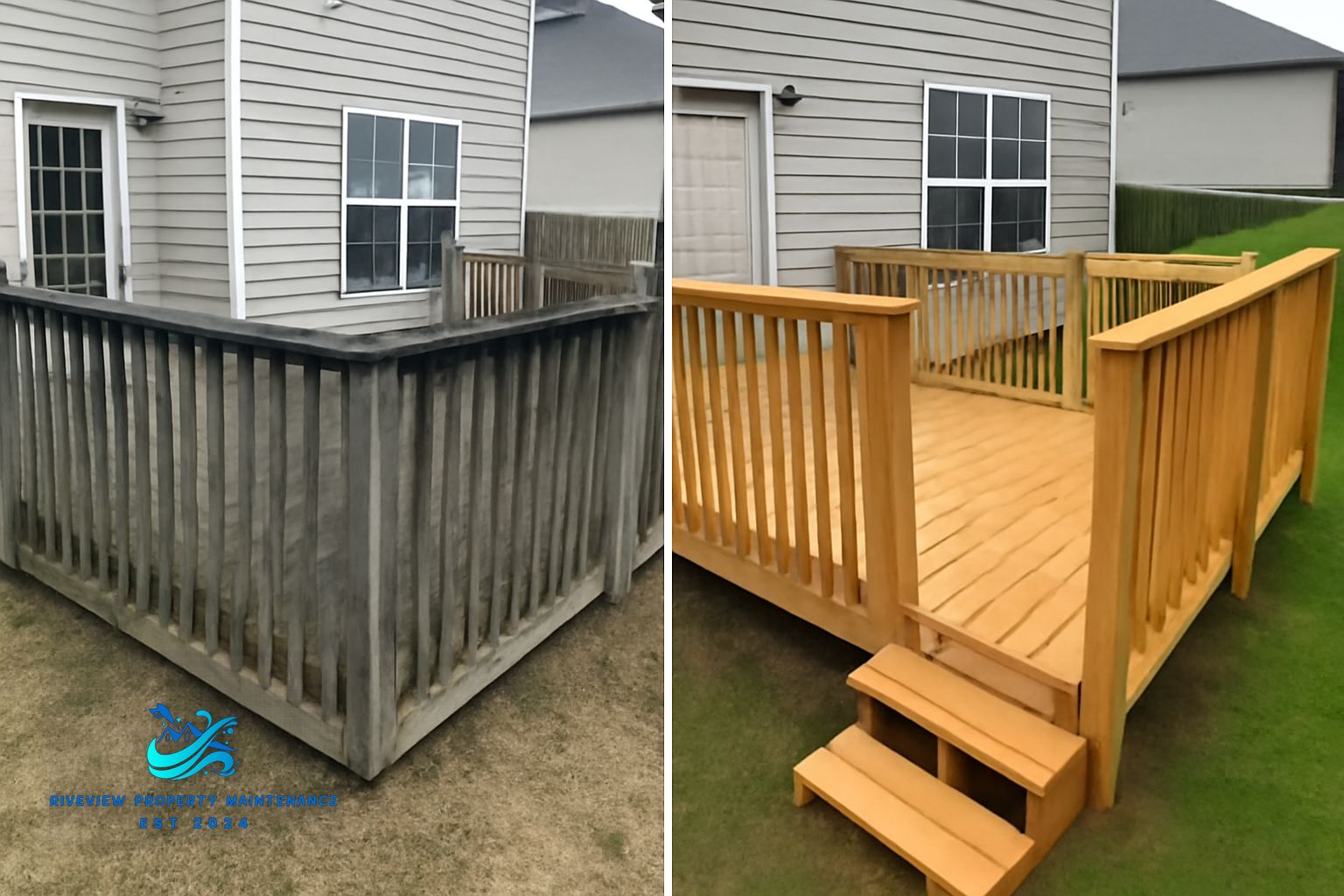
Pine pollen is another factor people underestimate. In spring, a thick yellow-green film settles into every crack and crevice in your fence pickets and deck rails. It acts like a nutrient source for the algae and mold that follow. By the time pollen season wraps up, the biology is already working its way into the wood. Waiting until fall to clean means you have given that growth a four-month head start.
Our Deck and Fence Cleaning Process
We do not point a high-pressure wand at your deck boards and call it a day. High pressure alone tears into wood fibers, raises the grain, and leaves you with a surface that looks rougher than before and soaks up water even faster. Our process starts with the right chemistry applied at low pressure to break down organic growth, mildew, and embedded dirt before water ever touches the boards.
Step-by-Step: What Happens When We Show Up
- Pre-inspection: We identify the decking material, note any soft or rotted boards, and flag areas that need hand scrubbing or spot treatment before we begin.
- Surface pre-wet: Surrounding plants, mulch beds, and concrete are rinsed down to protect them from cleaning solution runoff.
- Low-pressure soft wash application: A biodegradable cleaning solution is applied at low pressure to the full deck or fence surface, dwelling long enough to kill and lift algae, mold, mildew, and bio-film.
- Controlled rinse: We rinse at the appropriate pressure for the material, higher for composite and pressure-treated, lower for aged or painted wood, to clear all residue without damaging fibers.
- Post-clean inspection: We walk the entire surface with you to confirm results and point out any boards or rails that may need repair before a sealer or stain is applied.
- Optional brightener treatment: For wood decks headed toward staining or sealing, a wood brightener step opens the grain and restores the natural tone so the finish coat bonds correctly.
Wood vs. Composite: What Changes in the Cleaning Approach
A lot of newer construction in Hamilton Mill and Apalachee Farms came with composite decking from builders who wanted a low-maintenance selling point. Composite is low maintenance, but it is not no maintenance. The cap layer on composite boards still develops black algae streaks, and the surface can get slick enough to cause a fall. We use a targeted algae-killing solution and a lower rinse pressure on composite to avoid voiding any surface warranty and to keep the cap layer intact.
Pressure-treated pine and cedar boards need a different approach. The goal with natural wood is to clean thoroughly enough that a sealer or semi-transparent stain can penetrate the grain rather than sitting on top of old mildew and oxidation. If you skip a proper cleaning before you restain, the new coat peels within a season. We have seen plenty of that in Dacula and it always costs the homeowner more time and money in the end.

Fence Cleaning: Privacy Panels, Pickets, and Vinyl
Fences in Dacula face the same biology as decks, but they are vertical surfaces which actually helps them shed water faster. The problem is the shaded side. North-facing fence boards, especially in wooded lots common throughout 30019, stay damp much longer and develop heavy black mold and green algae lines that look terrible from the street. Vinyl fences develop a gray haze and streaks from oxidation and organic growth that simple garden-hose rinsing will not touch.
We clean wood privacy fences, wood and metal picket fences, and vinyl privacy and split-rail fences. The chemistry and pressure settings change based on the material, but the outcome is the same: a clean surface that looks intentional and not neglected. For HOA communities in Hamilton Mill, that matters. A lot of homeowners in Dacula get HOA notices about fence appearance. One professional cleaning usually resolves the issue and gives you a two-year head start before the next inspection cycle.
Deck Restoration: When Cleaning Is Just the First Step
Some decks in Dacula need more than cleaning. If your boards are badly grayed, checking along the grain, or showing surface weathering from multiple seasons without a protective coat, cleaning alone will restore the look but leave the wood vulnerable. After we clean and brighten the surface, we can walk you through the options for a penetrating stain or sealer that will lock out moisture and slow the graying process significantly.
We are not a paint contractor and we do not upsell coatings on every job. But when the wood genuinely needs protection, we will tell you plainly and give you a straight quote. A lot of Dacula homeowners tell us they wish they had done the clean-and-seal combination five years earlier because the deck they have now would be in much better shape.
Signs Your Dacula Deck Needs Professional Restoration
- Boards have turned a uniform dull gray even in full-sun sections
- You can see black or green staining in the gaps between planks that does not wash off with a hose
- The surface feels rough or splintery when you walk barefoot
- Water beads are gone and boards soak up water immediately after rain
- Mildew smell is noticeable in wet weather
- An HOA letter mentioned fence or deck appearance
Serving Dacula and the Rest of Gwinnett and Barrow County
Riverview Property Maintenance is based in Lawrenceville and covers all of Gwinnett County, including Dacula 30019, plus Barrow County towns like Winder and Auburn. If you are in Hamilton Mill near the Apalachee River corridor or in one of the newer sections of Apalachee Farms closer to Braselton Highway, we are a local crew that shows up on time and does the work right. You can reach us directly at (470) 968-5156 or fill out the quote form on our website.

We do not subcontract the deck and fence work out. The crew that quotes the job is the crew that shows up to do it. That matters in neighborhoods where trust and follow-through are everything, and it is how we have built our reputation across Gwinnett and Barrow counties over the years.
Frequently Asked Questions
How much does deck cleaning cost in Dacula, GA?
Pricing depends on the size of the deck, the type of material, and how much organic buildup is present. Most standard residential decks in the Hamilton Mill and Apalachee Farms area fall in a range that we quote after a quick walk-through or a few photos. Call (470) 968-5156 for a free on-site or photo-based quote.
Will pressure washing damage my deck boards?
High pressure applied directly to wood grain can raise the surface and cause splintering, which is why we use a soft wash approach for most deck cleaning jobs. We control pressure based on the material and age of the wood so the surface comes clean without new damage.
How often should I have my deck professionally cleaned in the Dacula area?
Most decks in Dacula's 30019 zip code benefit from a professional cleaning every one to two years. Decks under heavy tree canopy or on the north side of a home may need attention annually because of faster algae and mildew growth in those shaded, damp conditions.
Can you clean composite decking without voiding the warranty?
Yes. We use manufacturer-compatible cleaning solutions and appropriate low-pressure rinse settings for composite surfaces. We are familiar with the common composite brands used in Gwinnett County new construction and we adjust our process to stay within those guidelines.
Do you also clean vinyl and aluminum fences in Dacula?
We do. Vinyl privacy fences and aluminum picket fences both pick up oxidation, algae, and mildew streaks and respond well to our soft wash process. The cleaning solution and rinse pressure are adjusted so the fence comes clean without surface damage or discoloration.
Is it worth sealing or staining my deck after cleaning?
For natural wood decks, sealing or staining after a professional clean and brightener treatment significantly extends the life of the boards and slows the graying process. We will give you an honest assessment when we look at the deck. If the wood is in good shape and just needs cleaning, we will tell you that. If it needs protection, we will walk you through the options.