If you live in Mulberry or the surrounding Gwinnett County communities near the 30047 zip code, you already know what spring looks like: a yellow-green coat of pine pollen on every horizontal surface, followed by red Georgia clay splashed up by afternoon thunderstorms. By the time summer humidity settles in, the concrete on your patio and front sidewalk can look like it has never been cleaned. Riverview Property Maintenance works in Mulberry and neighboring areas every week, and concrete restoration is one of the most requested jobs we get all season long.
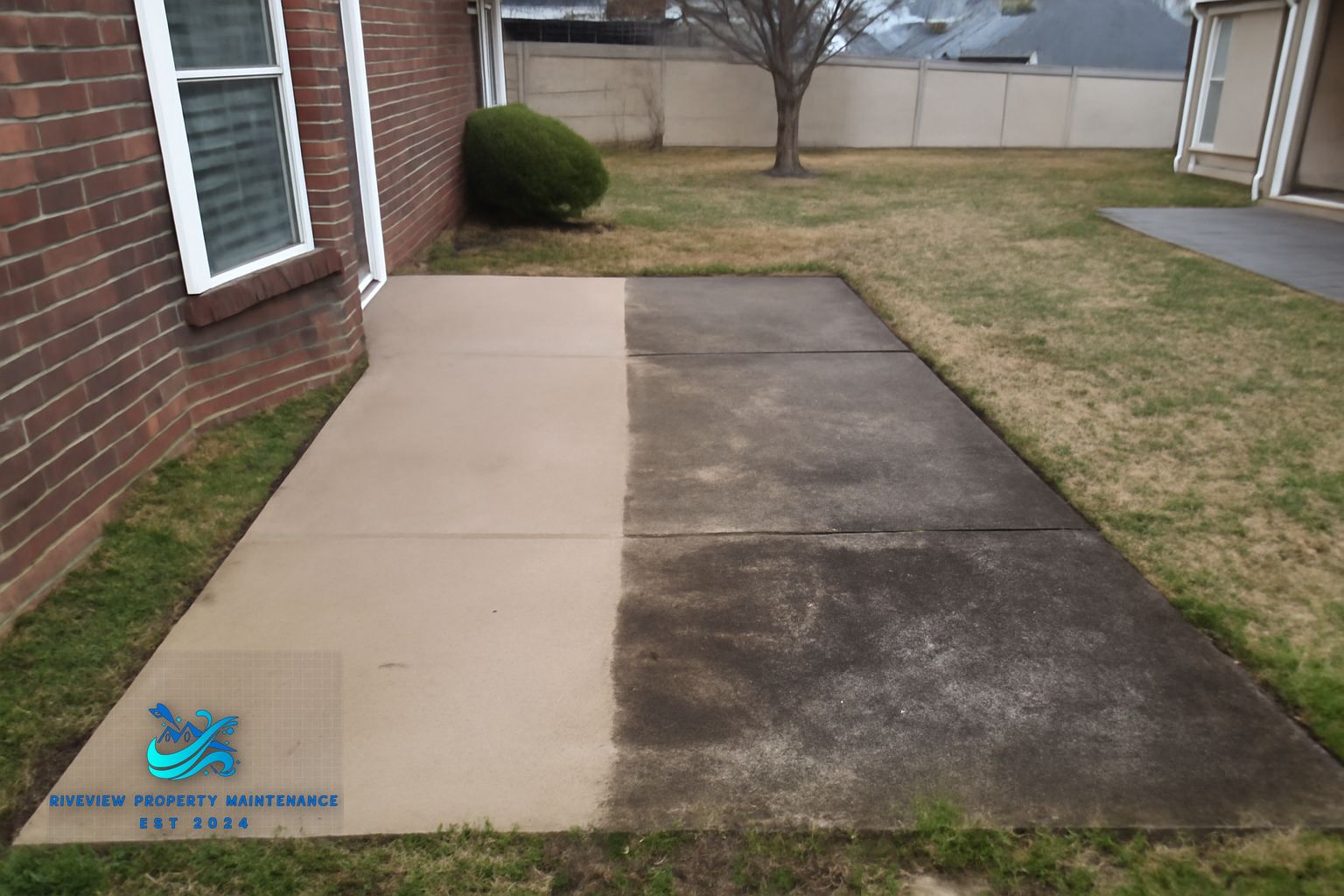
Pressure washing a patio or sidewalk is not just about curb appeal. Ground-in pollen, algae, and wet clay create slippery surfaces that are a genuine slip hazard, especially on the steps and walkways leading to your front door. A thorough cleaning removes that biological buildup and restores the surface texture the concrete was designed to have. Most homeowners are surprised at how different the color looks when the job is done, it is not just clean, it looks like new concrete.
What Makes Mulberry Concrete So Hard to Keep Clean
Mulberry sits in a pocket of Gwinnett County that gets a lot of tree canopy. Hardwood oaks and tall pines drop shade year-round, and shaded concrete stays damp longer than open slabs do. That moisture feeds algae and mildew growth, and the dark streaks that result can soak into concrete pores over time. Combine that with the heavy red clay soil common throughout this part of Georgia and you have a recipe for concrete that looks perpetually dirty no matter how many times it rains.
Pine pollen season runs from roughly late February through April in Gwinnett County, and it coats everything. When pollen mixes with morning dew on concrete, it creates a fine sticky film. After a few cycles of pollen, rain, and heat, that film hardens and bonds to the surface. Standard garden-hose rinsing will not remove it. That is where commercial-grade pressure washing at the right PSI and with the right surface cleaner attachment makes all the difference.
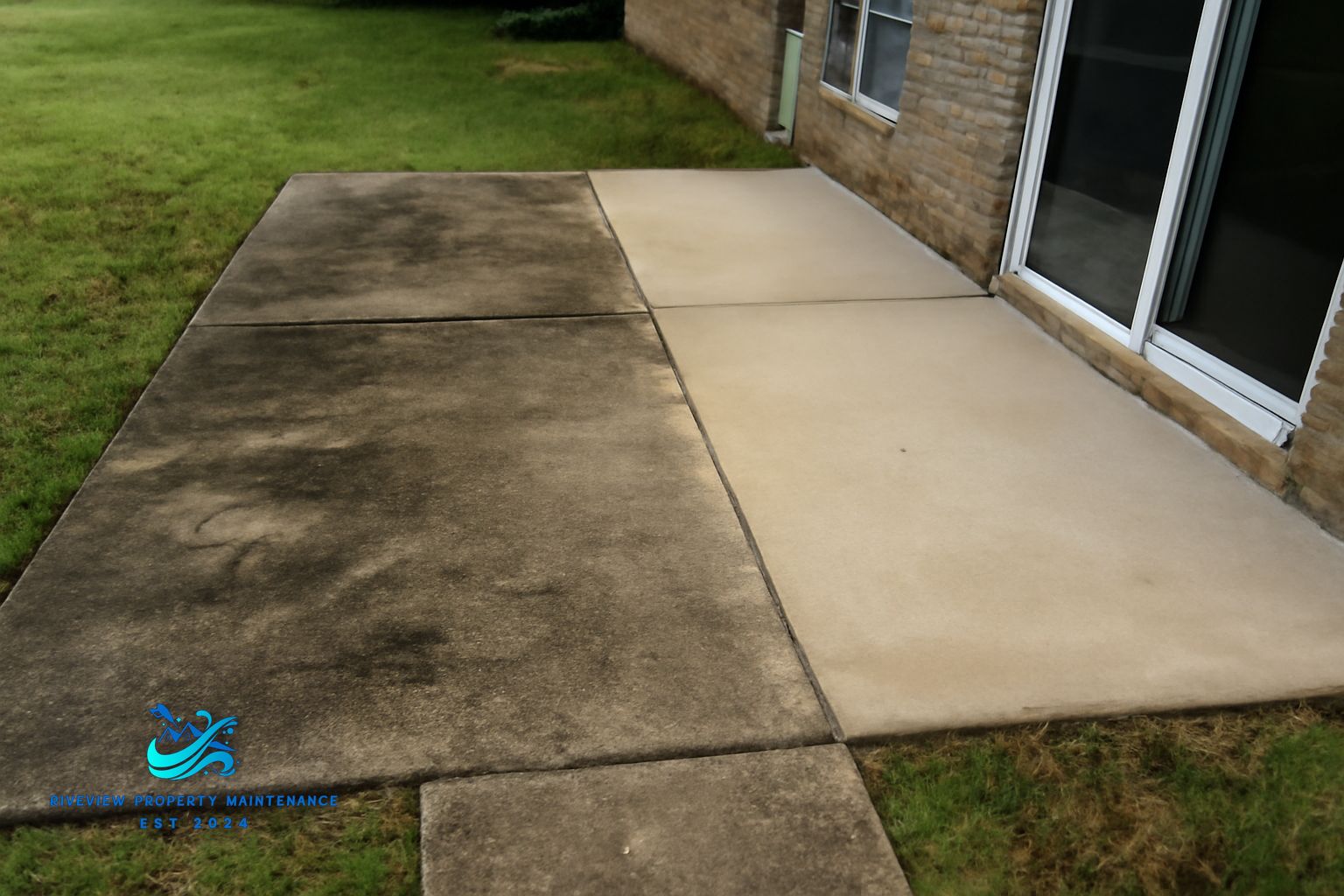
Our Pressure Washing Process for Patios and Sidewalks
Riverview Property Maintenance uses a surface cleaner, a rotating bar attachment, rather than a straight wand for flat concrete work. The surface cleaner delivers consistent, even pressure across the full slab width. That means no tiger-stripe lines and no missed strips. We pre-treat heavy organic staining with a biodegradable cleaning agent before the hot water pass, which breaks down algae and mildew at the root rather than just blasting the surface. The result is cleaner, and it stays cleaner longer.
- Pre-treatment of pollen film, algae, and clay staining
- Commercial surface-cleaner attachment for streak-free results
- Hot water rinse to flush debris from concrete pores
- Edging along landscaping, expansion joints, and transitions
- Final rinse to clear loose material from the property
- Optional concrete sealing available to extend cleanliness between visits
Sidewalks, Pool Decks, and Driveway Aprons
We do not stop at the back patio. Many Mulberry homes have connected concrete systems: the front sidewalk leading from the street, the driveway apron, side walkways, and pool decks or screened-porch slabs out back. Cleaning all connected concrete in one visit makes sense both for cost and for the finished look. There is no point in having a sparkling driveway if the front sidewalk is still coated in red clay and green algae. We quote connected concrete as a package, and most homeowners find the combined price is better than they expected.
Pool decks in Mulberry get a slightly different treatment. The concrete around a pool stays wet for extended periods and is almost always shaded part of the day, which is perfect growing conditions for the kind of slippery black algae that sends people to urgent care. We use a lower pressure setting near pool coping and tile to avoid damage, and we always contain runoff so cleaning chemicals do not enter pool water.
How Often Should Mulberry Homeowners Schedule Concrete Cleaning?
For most Mulberry homes, once a year is enough to stay ahead of serious buildup. The best timing is usually late spring after pollen season wraps up, or early fall before leaves come down and create another round of staining. If your concrete is heavily shaded by oaks or pines, or if you have had drainage issues that splash clay onto the slabs, twice a year may make more sense. We are happy to walk the property and give you an honest recommendation. There is no point in selling a service you do not need.
- Once a year: standard Gwinnett County homeowner with moderate tree cover
- Twice a year: heavy oak or pine shade, north-facing slabs, frequent clay runoff
- After major storms: when red mud has soaked into expansion joints or pitted concrete
- Before selling the home: fresh concrete dramatically improves listing photos and first impressions
- Before hosting events: outdoor gatherings go better on clean, dry, non-slippery concrete
Serving Mulberry and the Surrounding Gwinnett Communities
Riverview Property Maintenance is based in the Lawrenceville and Gwinnett County area and runs crews throughout the region five to six days a week. From Mulberry we regularly travel to Grayson (30017), Loganville (30052), and back into the 30043 and 30044 corridors in Lawrenceville. If you are in Mulberry or just outside it in the unincorporated Gwinnett County neighborhoods off Highway 20 or around the Mulberry Road and Tribble Mill Park area, we can get to you quickly. Call us at (470) 968-5156 to check availability and get a same-week quote.
Frequently Asked Questions
Frequently Asked Questions
How long does it take to pressure wash a patio and front sidewalk in Mulberry?
For most residential properties in Mulberry and the 30047 area, a standard patio plus front sidewalk job takes between 45 minutes and two hours depending on total square footage and how heavy the staining is. If we are cleaning connected concrete, driveway apron, side walks, and rear patio together, budget closer to two to three hours. We give you a time estimate when we book the appointment.
Will pressure washing damage my concrete patio or stamped concrete?
Standard broom-finish and exposed-aggregate concrete handles pressure washing well at the PSI levels we use. Stamped or decorative concrete is a different situation, we use a lower pressure setting and take extra care around sealant and pattern lines. We also avoid angling the wand directly at control joints or any cracked areas. If your concrete already has significant cracking, we flag that before we start and discuss the right approach.
Can you remove red Georgia clay staining that has been sitting for years?
Yes, in most cases. Red clay from Georgia's iron-rich soil is stubborn but it responds well to a combination of pre-treatment and high-temperature water. If clay has been sitting for multiple seasons and has worked deep into porous concrete, a second pass or a follow-up sealer application may be needed for best results. We will be upfront with you about what is realistic before the work begins.
Do you offer concrete sealing after pressure washing in Mulberry?
We do. Sealing freshly washed concrete is one of the best ways to slow down the return of pollen film, algae, and clay staining. We let the concrete dry fully, usually 24 hours, before applying sealer. A properly sealed slab is also easier to rinse clean with a garden hose between professional visits, which keeps maintenance costs low over time.
What areas near Mulberry do you serve?
Riverview Property Maintenance serves all of Gwinnett County and the Northeast Atlanta suburbs, including Mulberry, Grayson (30017), Loganville (30052), Lawrenceville (30043, 30044, 30045, 30046), Dacula (30019), Buford (30518, 30519), and into Barrow County communities like Winder (30680) and Auburn (30011). Call (470) 968-5156 to confirm availability at your address.
Is pressure washing safe for the landscaping and plants around my patio?
We take precautions to protect landscaping. Pre-treatment solutions we use are biodegradable and we rinse them quickly so they do not sit on plant material. We direct water flow away from mulch beds and garden borders where possible. For particularly sensitive plantings right at the edge of a patio or sidewalk, we can wet them down before and after the wash as an extra buffer. Most residential landscaping handles the process without any issue.