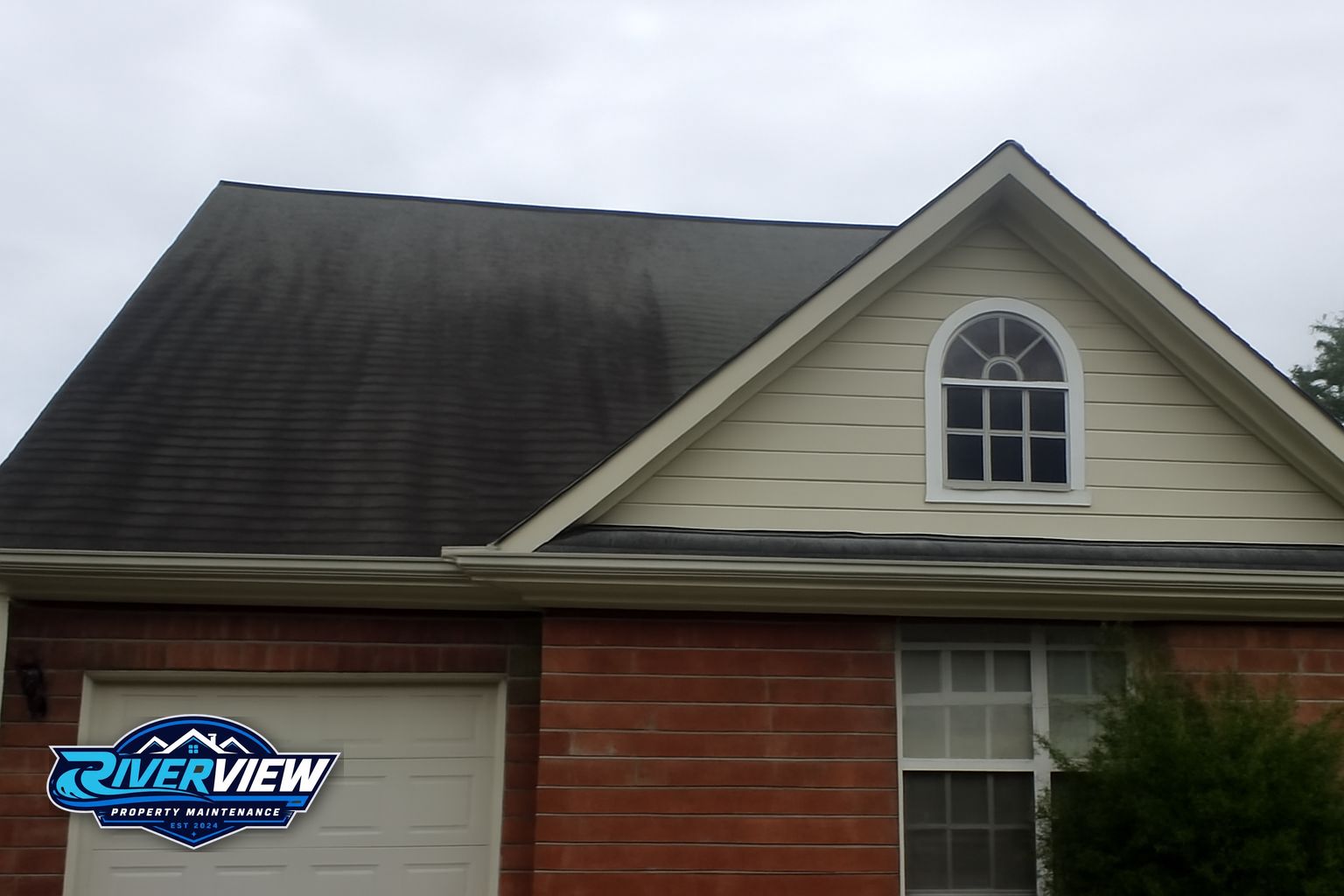
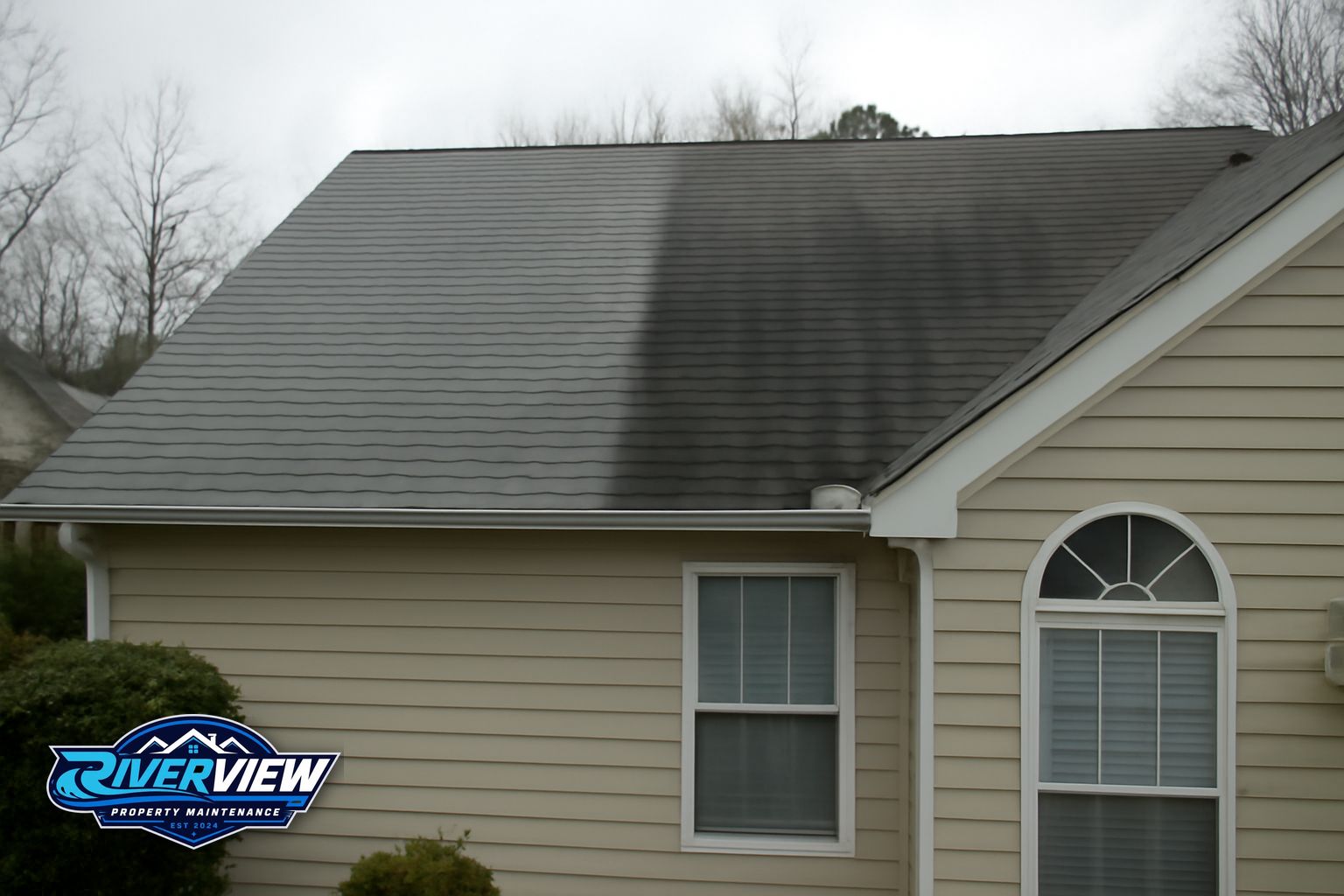
Drive through Sugarloaf Country Club Estates or wind through the streets of Rivermoore Park on a summer afternoon and you will spot it on house after house: those long dark stains running down the roof slope from ridge to eave. A lot of homeowners in Lawrenceville's 30043, 30045, and 30046 zip codes assume it is dirt, tree debris, or just an aging roof. It is not. It is Gloeocapsa magma, a form of algae that feeds on the limestone filler in asphalt shingles. Left alone, it shortens roof life, traps heat in your attic, and makes a well-maintained home look neglected. Riverview Property Maintenance removes it safely with roof soft washing, no high-pressure blasting that strips granules, just the right low-pressure mix that kills the organism at the root.
Gwinnett County's climate is practically a growth lab for roof algae. Summers here run hot and humid well into September. The oak and hardwood canopy that gives neighborhoods like Rivermoore Park their character also keeps the north-facing roof slopes in shade for most of the day, which means moisture lingers. Add the spring pine pollen that coats every surface in a fine yellow film and you have nutrients sitting on your shingles waiting for algae and mold to move in. Homeowners in the 30043 and 30045 corridors near Old Norcross Road and Sugarloaf Parkway tell us they started noticing streaks within three to four years of a new roof installation. That is completely normal for this part of Georgia, and it is completely fixable.
What Roof Soft Washing Actually Does
Pressure washing a roof is a bad idea. The granules embedded in your asphalt shingles are what give them their fire rating and UV resistance. Strip those with a high-pressure wand and you accelerate aging by years. Soft washing uses a low-pressure application, typically under 100 PSI at the surface, combined with a biodegradable cleaning solution that kills algae, lichen, moss, and mildew at the biological level. The treatment does not just scrub the surface; it breaks down the organism's cell structure so regrowth is significantly slower. Most Lawrenceville homeowners see results that last two to four years before a follow-up treatment is needed, depending on tree coverage and roof pitch.
Neighborhoods and Subdivisions We Serve in Lawrenceville
Riverview Property Maintenance is based locally and works throughout Lawrenceville's four zip codes on a regular schedule. Here are some of the communities where we clean roofs most often.
- Rivermoore Park (30043), Dense hardwood lots mean north-facing roofs stay damp. We see heavy algae and occasional moss here every season.
- Sugarloaf Country Club Estates and surrounding Sugarloaf Parkway corridor (30045), Larger homes with steep pitches; streaks are visible from the street and affect curb appeal and HOA compliance.
- Downtown Lawrenceville and older neighborhoods near the Historic Courthouse Square (30046), Mix of older architectural shingles and flat membrane roofs. We tailor the treatment mix to the material.
- Northbrook, Alcott Farms, and Villages of Bridgemill adjacent areas (30043, 30044), Fast-growing neighborhoods with younger roofs that are already showing early algae spotting.
- Herrington subdivision and communities off Lawrenceville-Suwanee Road (30043), Pine tree coverage accelerates pollen and debris buildup on roofs each spring.
The Georgia Roof Problems We Treat
Black algae streaks get the most attention because they are so visible, but they are not the only thing growing on Lawrenceville rooftops. Our soft washing service addresses the full range of biological growth common to this part of Georgia.
- Gloeocapsa magma algae, the dark brown-to-black streaking that runs from ridge to gutter on shaded slopes
- Green algae and moss, common on low-pitched roofs in 30046 neighborhoods with heavy tree canopy, holds moisture and causes premature shingle decay
- Lichen, the flat gray-green crusty growth that bonds to shingles and is the hardest to kill; requires dwell time and a second application on mature colonies
- Mildew and mold, often concentrated near the gutter line and around roof penetrations like pipe boots and skylights
- Pine pollen and organic debris, not biological growth itself but a food source that accelerates algae colonization after every spring season in Gwinnett County
Why Streaks Come Back Faster on Some Roofs
A few factors speed up regrowth. North-facing slopes in shaded yards like those in Rivermoore Park dry out slowly after rain, giving algae the extended moisture window it needs. Older zinc or copper ridge strips have worn out on many Lawrenceville homes built in the late 1990s and early 2000s, those metal strips leach ions that naturally inhibit algae, and once they are gone the protection disappears. Gutters clogged with oak leaves and pine needles overflow and keep the lower roof edge wet. Cleaning the roof without addressing the gutters is only part of the solution, which is why we offer gutter cleaning as an add-on to every roof soft wash job.
How the Roof Soft Washing Process Works
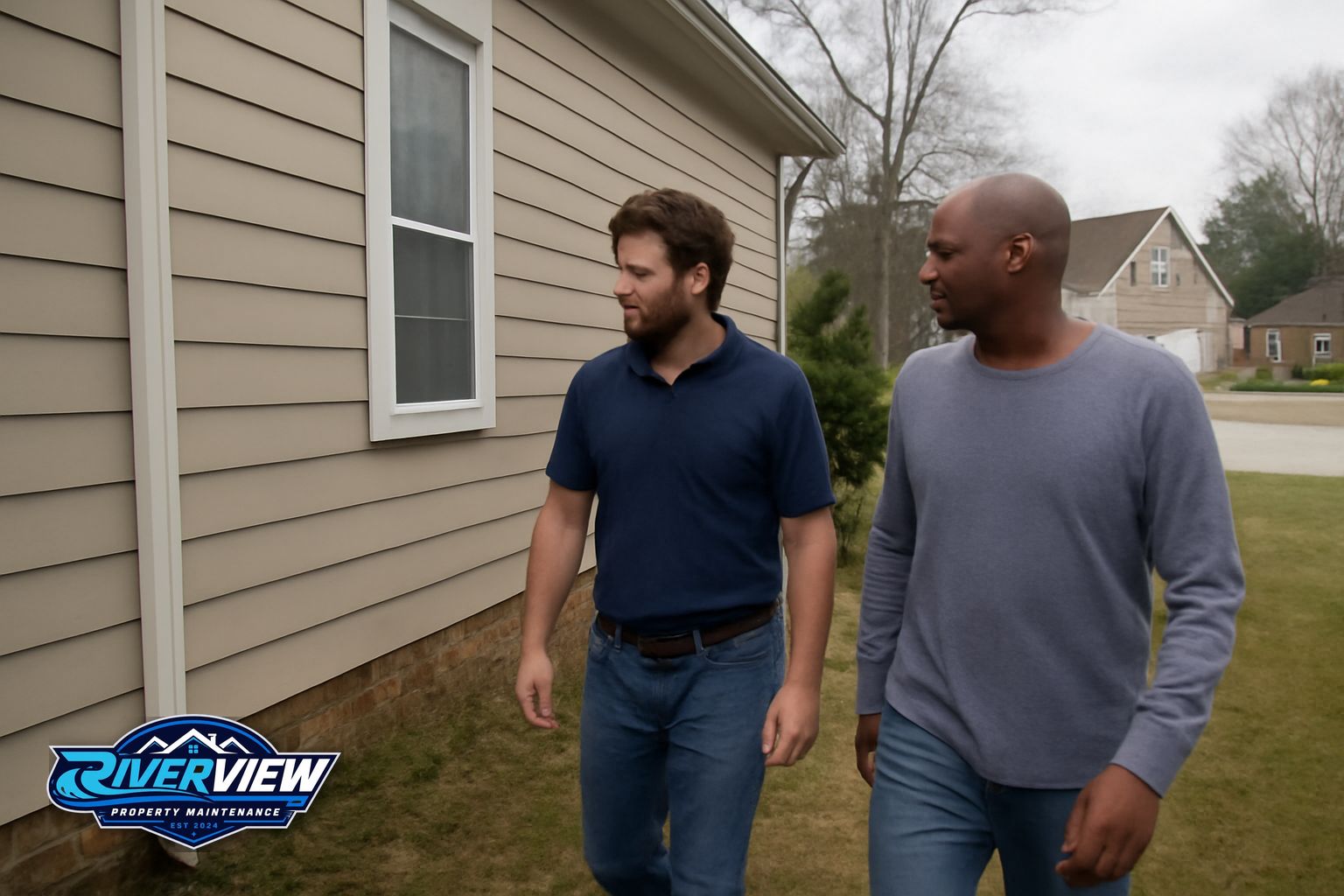
When we arrive at your Lawrenceville home, we start with a ground-level inspection to assess the type and severity of growth, the roof material, the pitch, and any areas around skylights, chimneys, or pipe boots that need extra attention. We wet down surrounding landscaping before we begin to protect it. The cleaning solution is applied at low pressure from the roof surface or from a ladder position, never from a ground-level gun that requires high pressure to reach upper slopes. We let the solution dwell, then rinse thoroughly. On most standard homes in Lawrenceville's suburban neighborhoods, the full process takes two to three hours. Results are immediate and dramatic, the streaks disappear within hours as the dead algae rinses away.
Safe for Your Shingles, Landscaping, and Siding
One of the most common questions we get from homeowners in 30043 and 30045 is whether the cleaning solution will harm their flower beds or vinyl siding. We use biodegradable, surfactant-based solutions and we rinse all plant material before and after treatment. Our process meets the guidelines set by major shingle manufacturers including GAF and CertainTeed, which actually recommend low-pressure soft washing as the only acceptable roof cleaning method. Using a pressure washer on shingles can void your roofing warranty; soft washing does not.
Roof Soft Washing and Your Home's Value
Lawrenceville's real estate market moves quickly. Homes in Hamilton Mill-adjacent neighborhoods off Sugarloaf Parkway, in the Northbrook subdivision, and in downtown Lawrenceville's historic district are selling with competitive offers. A roof covered in dark algae streaks is one of the fastest ways to lose curb appeal and introduce doubt in a buyer's mind about the condition of the home. Appraisers note exterior condition, and some HOAs in Gwinnett County have written provisions that require roofs to be free of visible biological growth. Whether you are planning to sell, refinancing, or just want to protect your investment, a clean roof signals a well-maintained property.
What Roof Soft Washing Costs in Lawrenceville
Pricing depends on the square footage of the roof, the pitch, the level of biological growth, and whether add-ons like gutter cleaning are included. For a typical 2,000 to 2,500 square foot single-story home in Lawrenceville's 30043 or 30045 zip codes, roof soft washing falls in a range that most homeowners find worthwhile compared to the cost of premature shingle replacement. A full roof replacement in Gwinnett County currently runs $10,000 to $20,000 depending on the home size and material. Soft washing at a fraction of that cost extends shingle life and maintains manufacturer warranty compliance. We provide written estimates with no pressure and no surprise charges. Call (470) 968-5156 to schedule a free quote.
Frequently Asked Questions
Will roof soft washing damage my shingles or void my warranty?
No. Soft washing uses low pressure, under 100 PSI at the surface, which does not strip shingle granules. Major manufacturers like GAF and CertainTeed actually recommend soft washing as the correct cleaning method and prohibit high-pressure washing. Our process is warranty-safe.
How long does it take for the streaks to disappear after treatment?
Most of the visible streaking is gone within a few hours after treatment as the dead algae rinses away with rain or our final rinse. On roofs with heavier lichen growth, full clearing can take a few days as the organism breaks down. Either way, you will see a dramatic improvement on the same day.
How long will the results last on a Lawrenceville home?
In Gwinnett County's humid climate with heavy tree coverage, most homeowners see two to four years before regrowth requires another treatment. Homes in Rivermoore Park or Sugarloaf with significant oak and pine canopy on the north side of the roof tend toward the shorter end of that range.
Is roof soft washing safe for my landscaping and flower beds?
Yes. We wet down all surrounding plant material before applying any solution and rinse thoroughly after the treatment. We use biodegradable, surfactant-based cleaners. We take the same precaution with vinyl siding, painted trim, and outdoor furniture near the drip line.
Do you also clean gutters when you wash the roof?
We offer gutter cleaning as an add-on to every roof soft washing job, and we recommend combining the two services. Clogged gutters overflow and keep the lower roof edge wet, which accelerates algae regrowth. Cleaning both in the same visit is more efficient and gives you better long-term results.
Which Lawrenceville zip codes do you serve for roof soft washing?
We serve all four Lawrenceville zip codes: 30043, 30044, 30045, and 30046, including neighborhoods like Rivermoore Park, Sugarloaf Country Club Estates, the downtown historic district, Northbrook, Alcott Farms, and communities along Old Norcross Road and Lawrenceville-Suwanee Road. Call (470) 968-5156 to confirm service for your address.